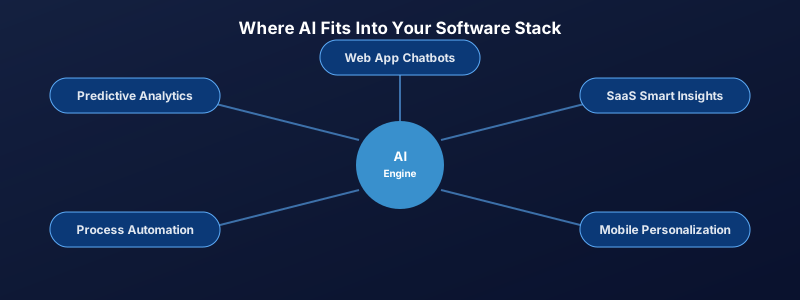
Every SaaS buyer evaluation in 2026 includes some version of the question: "What does this platform do with AI?" Five years ago that question barely existed. Today, platforms without a credible AI story are at a real competitive disadvantage — not because AI is fashionable, but because it genuinely changes what software can do for the businesses that use it.
From Static Dashboards to Predictive Insights
The most immediate shift we see in client SaaS projects is the move from reporting what already happened to forecasting what is likely to happen next. A subscription analytics dashboard that simply shows last month's churn is useful. One that flags which specific accounts are at elevated churn risk this week — based on usage patterns, support ticket sentiment, and login frequency — changes how a customer success team actually spends its time.
Smart Defaults and Personalization
AI also quietly improves the experience of using software, not just the insights it produces. Smart form-fill suggestions, personalized onboarding flows that adapt based on a user's role, and automatically prioritized task lists are all becoming standard expectations rather than premium add-ons. When we scope SaaS Development projects today, we build these capabilities into the architecture from day one rather than retrofitting them later.
Where AI Genuinely Helps — and Where It Does Not
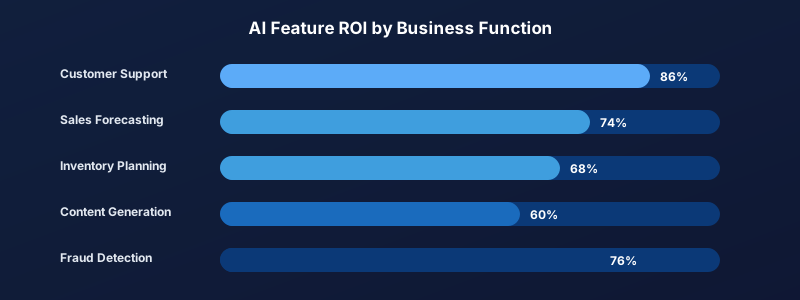
Not every feature benefits from an AI layer, and over-engineering a simple workflow with a model it does not need is a common and expensive mistake. AI earns its place when there is a pattern in historical data worth learning from, when manual review does not scale, or when personalization meaningfully improves outcomes. For straightforward rule-based logic, traditional code is still faster, cheaper, and more predictable — and we tell clients exactly that during scoping rather than selling AI for its own sake.
Getting Started Without Overcommitting
The SaaS products seeing the best results did not attempt a full AI overhaul on day one. They picked one well-defined capability — a recommendation engine, a churn predictor, a smart search — proved it delivered value, and expanded from there. That same incremental approach applies whether you are building a new SaaS platform from scratch or adding intelligence to an existing one.