Most companies are eager to "do something with AI" before they have the data, processes, or infrastructure in place to use it well. Here is the readiness audit we walk clients through before recommending any AI investment.
The pressure to adopt AI is real, and so is the risk of doing it badly. We have seen companies spend significant budget on AI tools and consulting only to get marginal results — not because the technology failed, but because the groundwork was never in place. An honest readiness audit before any investment saves far more money than it costs.
Data Quality Comes Before Anything Else
AI tools are only as good as the data they learn from or operate on. If customer records are scattered across three disconnected systems, if historical data is inconsistent or missing large gaps, or if nobody can say with confidence which version of a spreadsheet is current, no AI tool will produce reliable results on top of that foundation. The first and most valuable step in any AI readiness audit is almost always a data quality and consolidation effort — unglamorous, but essential.
Process Clarity Matters as Much as Data
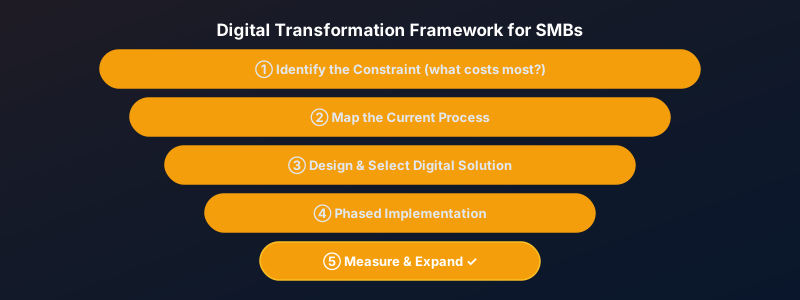
AI automates and augments existing processes; it does not invent good ones. If a workflow is unclear, inconsistent between employees, or undocumented, automating it with AI mainly succeeds in automating the inconsistency. We typically map the current process in detail as part of our Business Solutions engagements before recommending any AI tooling on top of it.
The Infrastructure Question
Where will this AI capability actually live — a third-party SaaS tool, a custom model integrated into your existing software, or a cloud AI service? This decision affects cost, data privacy, vendor lock-in, and how easily the capability can scale. It is worth deciding deliberately rather than defaulting to whichever vendor made the most compelling sales pitch.
A Practical Readiness Checklist
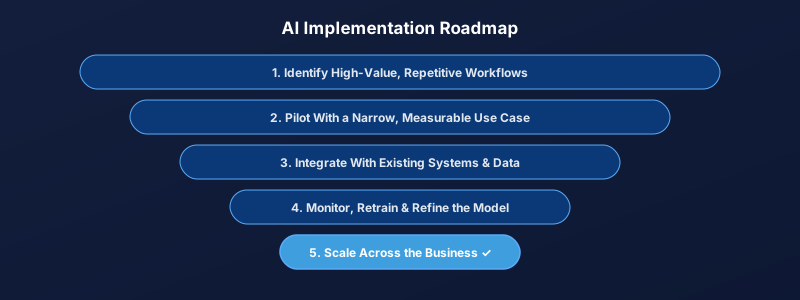
Before any AI investment, we ask clients to honestly assess: Is the relevant data centralized and reasonably clean? Is the process being automated well-understood and documented? Is there a clear, measurable definition of success? Is there a team member responsible for monitoring results after launch? Companies that can answer yes to all four are in a strong position to get real value from AI. Companies that cannot are better served starting with the groundwork — which is usually a faster path to results than jumping straight to AI tooling. If you are unsure where your business stands, our Business Solutions consulting engagements include this exact assessment.